
经管之家App
让优质教育人人可得
立即打开



当使用单机运行 PyTorch 模型进行推理时,处理小规模数据通常不会遇到问题。然而,一旦数据量上升至万级甚至百万级,系统瓶颈便迅速显现:内存不足、GPU 利用率低下、I/O 成为性能拖累,更不用说容错机制和多机扩展的需求了。
传统解决方案往往需要手动实现多线程 DataLoader、管理批次队列、调度 GPU 资源等,这类工程任务不仅繁琐,调试成本也较高。而 Ray Data 提供了一种轻量化的替代路径——在几乎不修改原有 PyTorch 代码的前提下,将本地推理流程无缝升级为分布式 pipeline。
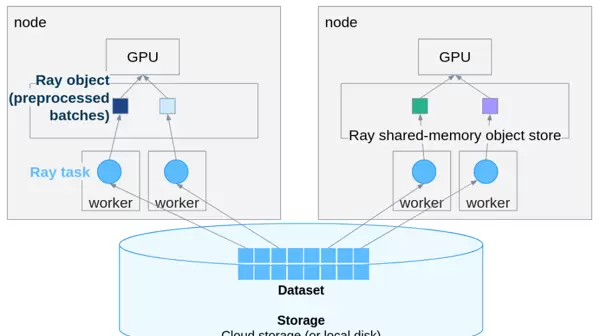
一个常见的推理过程包括模型加载、输入预处理以及批量预测,基本结构如下所示:
import torch
import torchvision
from PIL import Image
from typing import List

class TorchPredictor:
    def __init__(self, model: torchvision.models, weights: torchvision.models):
        self.weights = weights
        self.model = model(weights=weights)
        self.model.eval()
        self.transform = weights.transforms()
        self.device = 'cuda' if torch.cuda.is_available() else 'cpu'
        self.model.to(self.device)
    def predict_batch(self, batch: List[Image.Image]) -> torch.Tensor:
        with torch.inference_mode():
            batch = torch.stack([
                self.transform(img.convert("RGB")) for img in batch
            ]).to(self.device)
            logits = self.model(batch)
            probs = torch.nn.functional.softmax(logits, dim=1)
             return probs
对于少量图像(如几张图)的处理,这套流程完全可行:
predictor = TorchPredictor(
    torchvision.models.resnet152,
    torchvision.models.ResNet152_Weights.DEFAULT
)

images = [
    Image.open('/content/corn.png').convert("RGB"),
    Image.open('/content/corn.png').convert("RGB")
]
predictions = predictor.predict_batch(images)当图像数量从几张激增至几万乃至几百万张时,情况发生根本性变化:
若要从零构建一套稳定可靠的分布式处理流程,至少需要数天开发与调优时间。
Ray Data 是一个专为分布式场景设计的数据处理框架,与 PyTorch 高度兼容。其最大优势在于极低的改造成本,原始代码几乎无需重构即可实现扩展。
将原有的处理方法进行适配:
predict_batch替换为:
__call__主要改动点包括:
List[Image.Image]Dict[str, np.ndarray]值得注意的是,Ray Data 使用 numpy 数组而非 PIL Image,因其序列化效率更高,更适合跨进程通信。
import numpy as np
from typing import Dict

class TorchPredictor:
    def __init__(self, model: torchvision.models, weights: torchvision.models):
        self.weights = weights
        self.model = model(weights=weights)
        self.model.eval()
        self.transform = weights.transforms()
        self.device = 'cuda' if torch.cuda.is_available() else 'cpu'
        self.model.to(self.device)
    def __call__(self, batch: Dict[str, np.ndarray]):
        """Ray Data passes a dict batch with numpy arrays."""
        # Convert numpy arrays back to PIL Images
        images = [Image.fromarray(img_array) for img_array in batch["image"]]
        with torch.inference_mode():
            tensor_batch = torch.stack([
                self.transform(img.convert("RGB")) for img in images
            ]).to(self.device)
            logits = self.model(tensor_batch)
            probs = torch.nn.functional.softmax(logits, dim=1)

            # Get top prediction
            top_probs, top_indices = torch.max(probs, dim=1)
        return {
            "predicted_class_idx": top_indices.cpu().numpy(),
            "confidence": top_probs.cpu().numpy()
}根据实际数据规模选择合适的数据集构建方式:
小规模数据:可直接从内存构建:
import ray
import numpy as np

ray.init()

# Convert PIL Images to numpy arrays
images = [
    Image.open("/path/to/image1.png").convert("RGB"),
    Image.open("/path/to/image2.png").convert("RGB")
]

# Create Ray Dataset from numpy arrays
ds = ray.data.from_items([{"image": np.array(img)} for img in images])中等规模数据:建议通过文件路径延迟加载,减少初始内存压力:
# Create dataset from paths
image_paths = ["/path/to/img1.png", "/path/to/img2.png"]
ds_paths = ray.data.from_items([{"path": path} for path in image_paths])

# Load images lazily
def load_image(batch):
    images = [np.array(Image.open(path).convert("RGB")) for path in batch["path"]]
    return {"image": images}

ds = ds_paths.map_batches(load_image, batch_size=10)生产环境推荐方案:使用
read_images()# Most efficient - Ray handles everything
ds = ray.data.read_images("/path/to/image/directory/")
# or with specific files
ds = ray.data.read_images(["/path/img1.png", "/path/img2.png"])核心代码极为简洁:
weights = torchvision.models.ResNet152_Weights.DEFAULT

# Distributed batch inference
results_ds = ds.map_batches(
    TorchPredictor,
    fn_constructor_args=(torchvision.models.resnet152, weights),
    batch_size=32,
    num_gpus=1,
    compute=ray.data.ActorPoolStrategy(size=4)  # 4 parallel actors
)
# Collect results
results = results_ds.take_all()
# Process results
for result in results:
    class_idx = result['predicted_class_idx']
    confidence = result['confidence']
     print(f"Predicted: {weights.meta['categories'][class_idx]} ({confidence:.2%})")
注意:在新版 Ray 中,
concurrencycompute=ActorPoolStrategy(size=N)该方案带来的关键改进包括:
Ray 支持直接读取云存储中的数据,兼容 S3、GCS、Azure Blob 等主流对象存储服务:
# Read directly from S3, GCS, or Azure Blob
ds = ray.data.read_images("s3://my-bucket/images/")

results = ds.map_batches(
    predictor,
    batch_size=64,
    num_gpus=1,
    concurrency=8  # 8 parallel GPU workers
 )
同一套代码可在不同规模集群中运行,无论是 10 台还是 100 台机器,均无需修改逻辑:
# Connect to your Ray cluster
ray.init("ray://my-cluster-head:10001")

# Same code as before
ds = ray.data.read_images("s3://my-bucket/million-images/")
results = ds.map_batches(predictor, batch_size=64, num_gpus=1)为避免每个 batch 都重复加载模型带来的资源浪费,可采用 ActorPoolStrategy 使模型实例常驻内存:
from ray.data import ActorPoolStrategy

results = ds.map_batches(
    TorchPredictor,
    fn_constructor_args=(torchvision.models.resnet152, weights),
    batch_size=32,
    num_gpus=1,
    compute=ActorPoolStrategy(size=4)  # Keep 4 actors alive
)
此举显著提升整体吞吐性能。
此外,CPU 与 GPU 资源可精细化配置:
results = ds.map_batches(
    TorchPredictor,
    fn_constructor_args=(torchvision.models.resnet152, weights),
    batch_size=32,
    num_gpus=1,  # 1 GPU per actor
    num_cpus=4,  # 4 CPUs per GPU worker
    compute=ActorPoolStrategy(size=8)
)
推理完成后结果可直接写回云存储:
results.write_parquet("s3://my-bucket/predictions/")以下是用户容易忽略的问题:
# ? This will fail
ds = ray.data.from_items([{"image": pil_image}])

# ? This works
ds = ray.data.from_items([{"image": np.array(pil_image)}])

# ? Or use read_images() (best)
ds = ray.data.read_images("/path/to/images/")concurrency# ? Deprecated
ds.map_batches(predictor, concurrency=4)
# ? New way
ds.map_batches(predictor, compute=ActorPoolStrategy(size=4))# Monitor GPU memory and adjust batch_size accordingly
results = ds.map_batches(
predictor,
batch_size=16, # Start conservative
num_gpus=1
)# Too small: underutilized GPU
batch_size=4
# Too large: OOM errors
batch_size=256
# Just right: depends on your model and GPU
# For ResNet152 on a single GPU, 32-64 works well
batch_size=32# Check Ray dashboard at http://localhost:8265
ray.init(dashboard_host="0.0.0.0")def safe_predictor(batch: dict):
try:
return predictor(batch)
except Exception as e:
return {"error": str(e), "probs": None}import time
start = time.time()
results = ds.map_batches(predictor, batch_size=32)
results.take_all()
print(f"Processed in {time.time() - start:.2f} seconds")推荐使用 Ray Data 的情况:
无需引入 Ray Data 的情况:
总体而言,Ray Data 的核心价值在于迁移成本极低。只需微调 PyTorch 方法签名,并将数据封装为 Ray Dataset,即可获得多机扩展能力、自动 batching、并行优化、容错机制及云存储无缝集成等多项高级特性。
在你准备实现多线程数据加载器或手动管理 GPU 资源池之前,不妨先了解一下这种方法:将分布式系统中的复杂任务交给 Ray 来处理。这样可以让你更专注于模型的构建,而不是被底层的工程细节所困扰。
通过使用 Ray,你可以将诸如任务调度、资源分配和容错处理等繁琐工作自动化,从而大幅提升开发效率,并减少出错的可能性。这样一来,你的主要精力就可以集中在算法设计与性能优化上,而不必深陷于系统层面的实现细节中。
尤其是在需要扩展到多个设备或多台机器的场景下,Ray 提供了简洁而强大的抽象机制,使得并行化和分布式训练变得更加直观和易于维护。因此,在动手自研底层框架前,评估一下是否可以直接借助 Ray 实现相同目标,可能会为你节省大量时间和精力。

 扫码加好友,拉您进群
 全部版块
全部版块 我的主页
我的主页


 收藏
收藏






