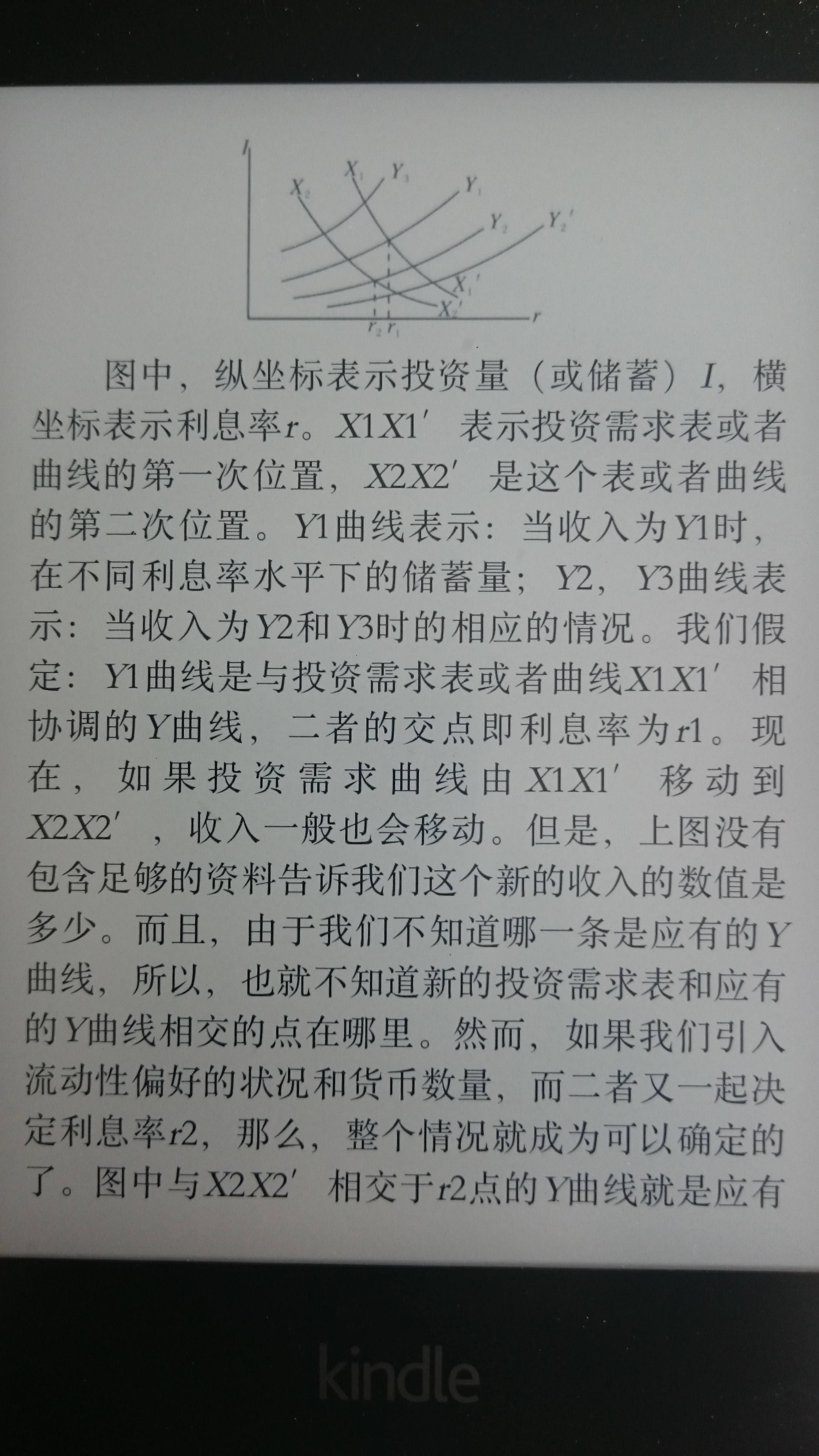
书上课后题有解释
The LM curve summarizes the relationship between the level of income and the inter- est rate that arises from equilibrium in the market for real money balances. It tells us the interest rate that equilibrates the money market for any given level of income. The theory of liquidity preference explains why the LM curve slopes upward. This theory assumes that the demand for real money balances L(r, Y) depends negatively on the interest rate (because the interest rate is the opportunity cost of holding money) and positively on the level of income. The price level is fixed in the short run, so the Fed determines the fixed supply of real money balances M/P. As illustrated in Figure 10–5(A), the interest rate equilibrates the supply and demand for real money balances for a given level of income.
Now consider what happens to the interest rate when the level of income increas- es from Y1 to Y2. The increase in income shifts the money demand curve upward. At the old interest rate r1, the demand for real money balances now exceeds the supply. The interest rate must rise to equilibrate supply and demand. Therefore, as shown in Figure 10–5(B), a higher level of income leads to a higher interest rate: The LM curve slopes upward.




 扫码加好友,拉您进群
 全部版块
全部版块 我的主页
我的主页