FT Confidential Research Add to myFT
Manufacturing boost not enough to arrest Chinese slowdown
Improvement in PMIs and FTCR data will not counter housing and infrastructure drag
JULY 5, 2017 by: FT Confidential Research
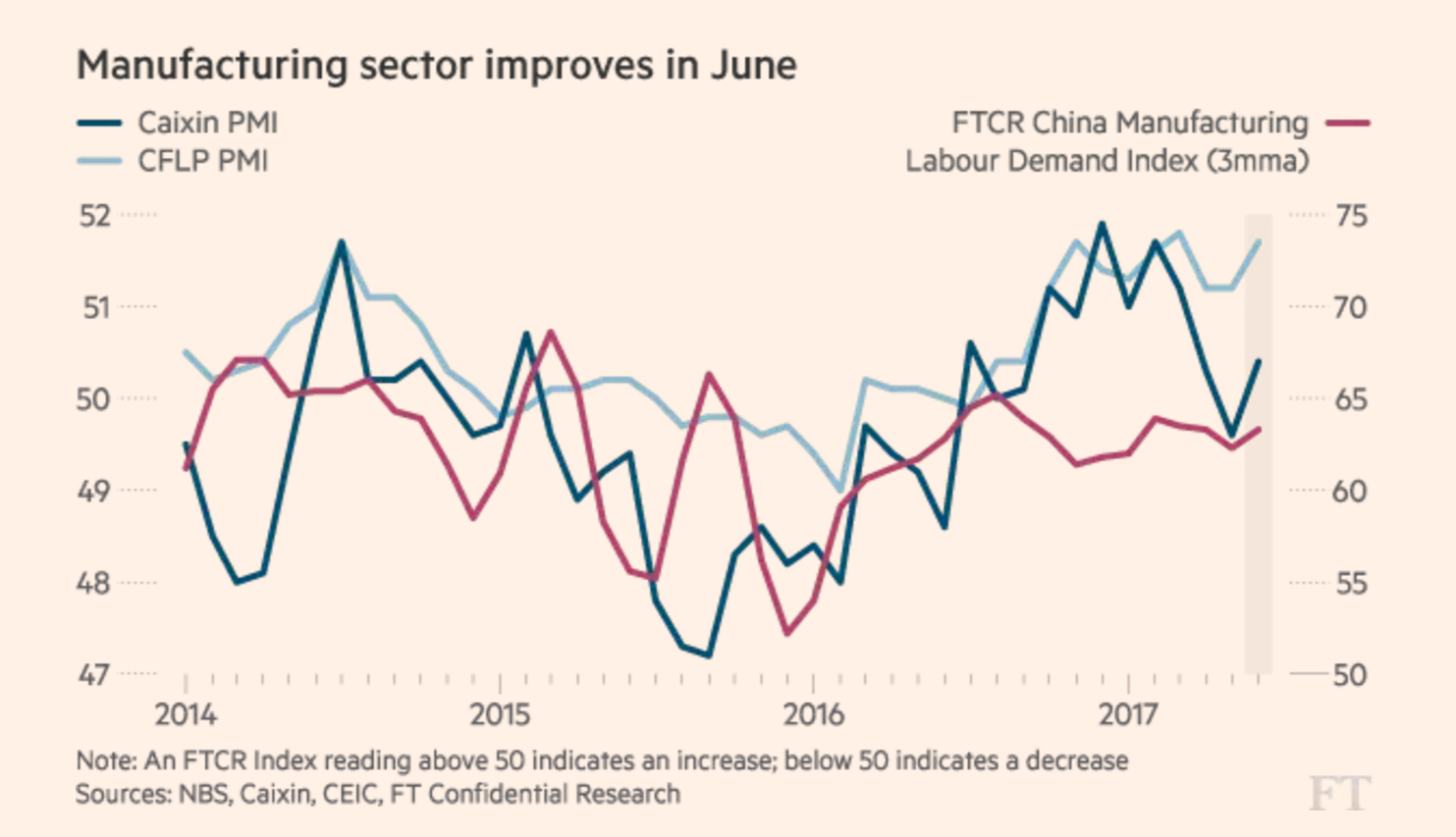
June PMIs and FTCR data showed improvement in the manufacturing sector.
- We do not think this is sustainable because the credit environment is deteriorating for manufacturing companies as the government clamps down on financial sector excess.
- Housing and infrastructure investment will continue slowing into the second half of this year, countering any support offered by a manufacturing uptick.
- Better than expected purchasing managers’ indices (PMIs) for June obscure the fact that housing and infrastructure, twin engines of Chinese growth, are set for a weak remainder of 2017. Even if second-quarter GDP data, due for release later this month, deliver a positive surprise, we believe growth may gradually slow through the end of 2017 and into 2018.
Both PMIs — one produced by the China Federation of Logistics & Purchasing (CFLP), a government-linked organisation, and one by Markit and distributed by financial platform Caixin — indicated that China’s manufacturing sector expanded in June. FTCR data released last week showed the manufacturing sector led overall growth in labour demand for the third month in a row (see chart).

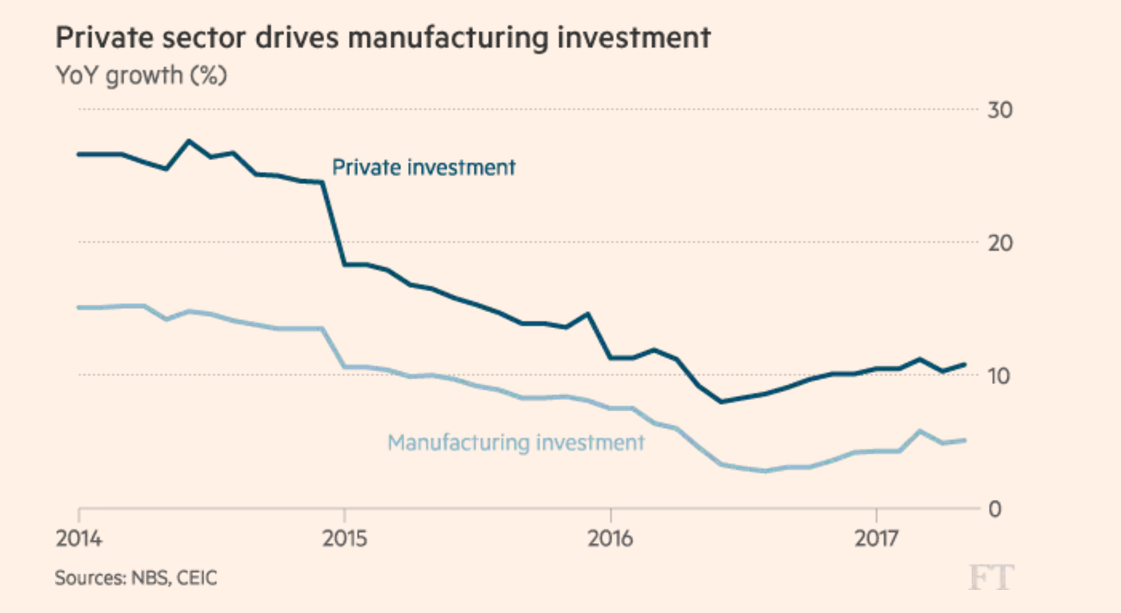
However, we see little room for growth in manufacturing. The credit environment for the sector’s largely private companies has become constrained as the leadership prioritises controlling risk in the financial system.
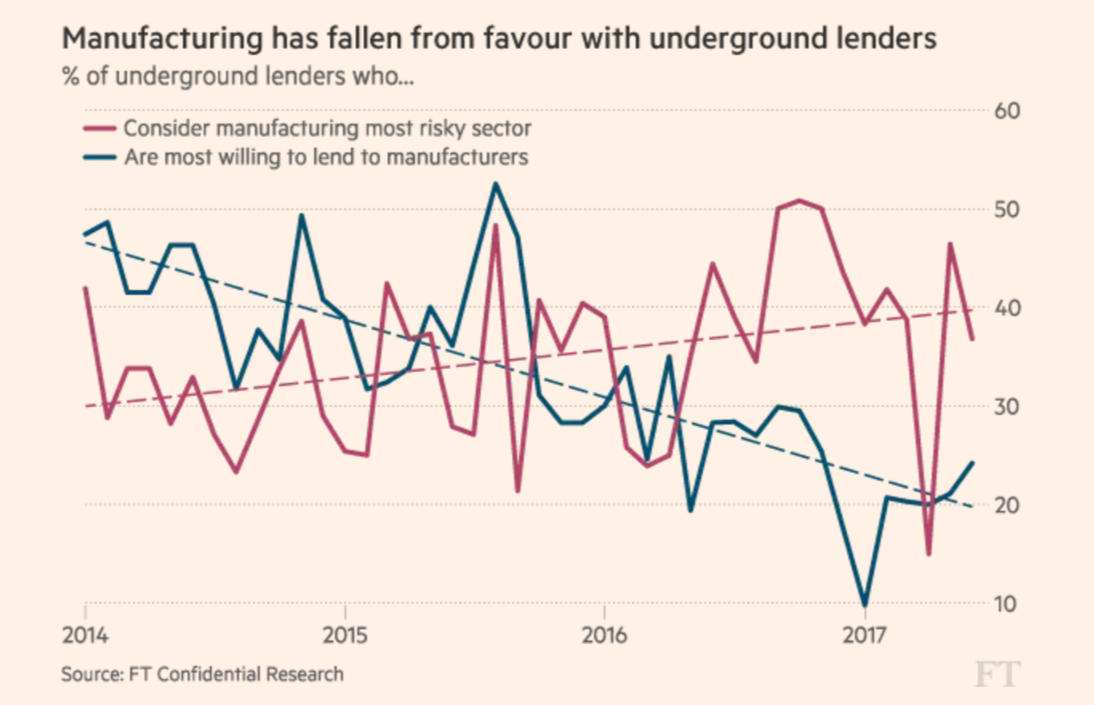
The government’s crackdown on the financial sector has resulted in higher interest rates and reduced access to funding from the shadow finance sector, which is where manufacturing companies typically obtain credit (see chart).

Our monthly survey of underground lenders shows manufacturers are considered increasingly high risk, with lenders generally unwilling to lend to them, despite modest improvement in recent months (see chart).

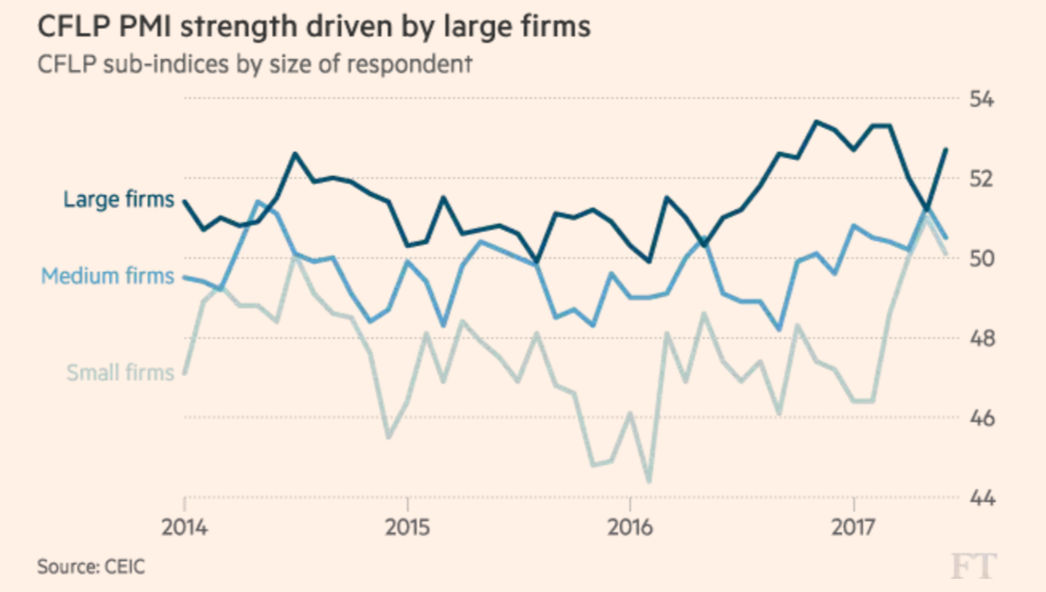
A breakdown of the CFLP PMI finds the June increase driven by large firms which have benefited most from government stimulus, while sub-PMIs covering medium and small-sized companies fell relative to May (see chart).

Even if manufacturing does lend some support, our monthly read of conditions in the housing market — the key driver of Chinese economic growth — shows that policy tightening at the central and local levels is strangling sales activities, and this is expected to feed through to investment with a lagging effect. We also expect weakening house price inflation to have a knock-on effect on consumer sentiment.
Infrastructure investment, which is also essential for meeting short-term growth targets, faces a tougher central government stance towards local government financing, including the investment vehicles (LGFVs) owned by such authorities. LGFVs have driven as much as 80 per cent of infrastructure investment activity in China but are now facing reduced support from the central government. Public-private partnerships, another local government channel for boosting infrastructure investment, also face increased scrutiny from central authorities.
Despite the evidence of manufacturing strength in the PMIs and in our data, the reality is that housing and infrastructure investment growth are both undergoing policy-induced slowdowns. It is difficult to see Chinese economic growth outperforming from here without a significant change of tack from the government.
FT Confidential Research is an independent research service from the Financial Times, providing in-depth analysis of and statistical insight into China and Southeast Asia. Our team of researchers in these key markets combine findings from our proprietary surveys with on-the-ground research to provide predictive analysis for investors.




 扫码加好友,拉您进群
 全部版块
全部版块 我的主页
我的主页


 收藏
收藏