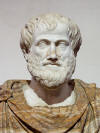
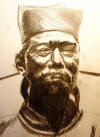
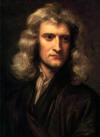
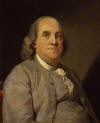
•Acharya Hemachandra (1089–1172), Indian poet, linguist, grammarian, historian, and philosopher.
•Nasir al-Din al-Tusi (Tusi) (1201–1274), Persian writer, astronomer, biologist, chemist, mathematician, philosopher, logician, physician, historian, physicist, and scientist. He was one of the greatest scientists of the thirteenth century.
•Leon Battista Alberti (1404–1472), Italian Renaissance author, artist, architect, poet, priest, linguist, philosopher, and cryptographer.
•Leonardo da Vinci (1452–1519),达.芬奇, Italian Renaissance painter, inventor, engineer, astronomer, anatomist, biologist, geologist, physicist, and architect.
•Mário Raul de Morais Andrade (1893–1945) was a Brazilian poet, novelist, musicologist, art historian, critic, and photographer.
•Nicolaus Copernicus (1473–1543),哥白尼, Polish Renaissance astronomer, mathematician, physician, artist, classical scholar, translator, economist, governor, military leader, and diplomat.
He formulated the heliocentric cosmology where the Earth spins, and revolves around the Sun. This marks the beginning of modern astronomy. It's referred to as the Copernican Revolution - no pun intended.
•Michelangelo di Lodovico Buonarroti Simoni (1475–1564), Italian Renaissance painter, sculptor, architect, poet, and engineer.
•MatrakçıNasuh (? - 1564) Muslim mathematician, historian, geographer, cartographer, calligrapher, artist, and engineer.
•Gerolamo Cardano (1501-1576), Italian mathematician and inventor.
He invented calculus at the same time as Newton, and it's his notation that we use today. In logic he created the binary system used in computers. In physics he anticipated Einstein; his theory of motion saw space as relative.
•Sir Isaac Newton (1643–1727) ,牛顿,English physicist, mathematician, astronomer, and alchemist. His 1687 publication of the Principia is one of the most influential books in science. It is in this work that Newton described gravitation and the three laws of motion.
•Benjamin Franklin (1706–1790), 富兰克林,American politician, author, printer, scientist, and inventor. He invented the wood burning stove and bifocals.
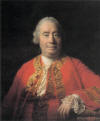
•David Hume (1711–1776,大卫.休谟) was a Scottish philosopher, historian, economist, and essayist. He is the most important and consistent empiricist philosopher.
•Mikhail Lomonosov (1711–1765),罗门诺索夫, writer, historian, artist, poet, physicist, chemist, and scientist. He discovered the atmosphere of Venus.
•Immanuel Kant (1724–1804,康德) was a German philosopher. His other areas of interest were logic, theology, mathematics, physics, geography, anthropology, law, and history.
His Critique of Pure Reason is one of the most important works in philosophy. It encompasses an attack on traditional metaphysics and epistemology, and highlights Kant's own contribution to these areas. The other main works of his maturity are the Critique of Practical Reason, which concentrates on ethics, and the Critique of Judgment, which investigates aesthetics and teleology.
•Thomas Jefferson (1743–1826), 托马斯.杰弗逊,American politician, horticulturist, architect, archaeologist, paleontologist, and inventor. He was the 3rd President of the United States, the principal author of the Declaration of Independence (1776), and the founder of the University of Virginia.
•Johann Wolfgang von Goethe (1749–1832),歌德, German Poet, Novelist, Playwright, scientist, philosopher, and Diplomat.
•Samuel Taylor Coleridge (1772–1834), 柯勒律治,English poet, critic, and philosopher. He coined the phrase suspension of disbelief. Coleridge was bipolar, and an opium addict.
•Thomas Young (1773–1829),托马斯.杨,English polymath who made notable contributions to the fields of vision, light, solid mechanics, energy, physiology, language, musical harmony, and Egyptology.
•Ernst Haeckel (1834–1919,海克尔) was a German naturalist, philosopher, physician, and artist. He discovered and named thousands of new species. view work
•Jose Rizal (1861–1896), Filipino ophthalmologist, poet, journalist, novelist, volcanologist, biologist, political scientist, painter, and polyglot.
•W. E. B. Du Bois (1868–1963) was an author, sociologist, historian, economist, and civil rights activist. He was the first African American to graduated from Harvard University where he earned his PhD in History. He was a professor of history and economics at Atlanta University, the head of the NAACP in 1910, founder, and editor of the NAACP's journal The Crisis.
Read: The Souls of Black Folk
•Walter Russell (1871–1963) painter, sculptor, architect, philosopher, and physicist. He believed mediocrity is self-inflicted, and genius is self-bestowed.
•Bertrand Russell (1872–1970,贝特兰.罗素) was a British philosopher, logician, mathematician, historian, pacifist, and social critic. In 1950 he was awarded the Nobel Prize in Literature.
•Charles Burgess Fry (1872–1956), English politician, publisher, teacher, writer, and athlete. He held the world record for the long jump.
•Albert Schweitzer (1875–1965), German theologian, philosopher, musician, physician, humanitarian, and activist. He won the 1952 Nobel Peace Prize, and spent the last years of his life campaigning against nuclear weapons.
•Ludwig Wittgenstein (1889–1951), 维特根斯坦,Austrian-British philosopher, logician, mathematician, architect, aeronautical engineer, and musician. Wittgenstein is one of the greatest philosopher of the 20th century. He inspired logical positivism and the philosophy of language.
•Jean Cocteau (1889–1963), French poet, novelist, artist, filmmaker, dramatist, designer, boxing manager, ballet scenarist, illustrator, and playwright.
•William James Sidis (1898–1944), Russian-Jewish child prodigy. He wrote on mathematics, cosmology, psychology, Native American history, and public transportation. "His sister, Helena, said of him that he could learn a new language in one day.
•André Malraux (1901–1976), French novelist, art historian, adventurer, and politician.
•Howard Hughes, Jr. (1905 – 1976),霍华德.休斯 American aviator, engineer, industrialist, film producer, film director, philanthropist, and one of the wealthiest people in the world.
Hughes set multiple world air-speed records, and expanded Trans World Airlines. Hughes was an eccentric obsessive–compulsive.
•John von Neumann (1903–1957), 约翰.冯.诺依曼 Hungarian American physicist, mathematician, contributions to game theory, economics, pioneering computer scientist.
•Jacques-Yves Cousteau (1910–1997), French oceanographer, naval officer, explorer, ecologist, filmmaker, scientist, photographer, author, and inventor. He co-developed the aqua-lung.
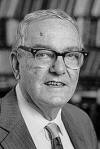
•Herbert Simon (1916–2001),赫伯特.西蒙,中文名“司马贺” American political scientist, psychologist, computer science, philosophy of science, a leader in artificial intelligence, and Nobel Prize winner in Economics. He wrote almost a thousand publications.
博主:我翻译过他的著作《人工科学》。
•George Price (1922–1975) was an American mathematician, chemist, and geneticist, biologist, and science journalist. He he committed suicide after giving all his possessions to the poor.
•Desmond Morris (1928 - ), British zoologist, painter, and author.
•Naquib Al-Attas (1931 - ), Islamic philosophy, metaphysics, theology, education, art, architecture, and military science.
•Jonathan Miller (born 1934), British theatre and opera director, author, television presenter, sculptor, and doctor.
•Rowan Williams (1950 -), Archbishop of Canterbury, theologian, poet, and speaks 12 languages, .
Views on creationism:
His believes that creationism should not be taught in schools as an alternative to evolution. He said, "I think creationism is, in a sense, a kind of category mistake, as if the Bible were a theory like other theories…, it's not what it's about."
•Julie Taymor (1952 - ) is an American director, actor, set designer, costume designer, and puppeteer. She has two Tony Awards, the Drama Desk Award for Outstanding Costume Design, an Emmy Award, and an Academy Award nomination for Original Song.
•Jamie Foxx / Eric Marlon Bishop (1967 - ), is an American actor, comedian, singer, and pianist. He won an Academy Award (Best Actor) for his performance in Ray. He's a Grammy Award winning musician (Unpredictable and Intuition).




 扫码加好友,拉您进群
 全部版块
全部版块 我的主页
我的主页

 收藏
收藏