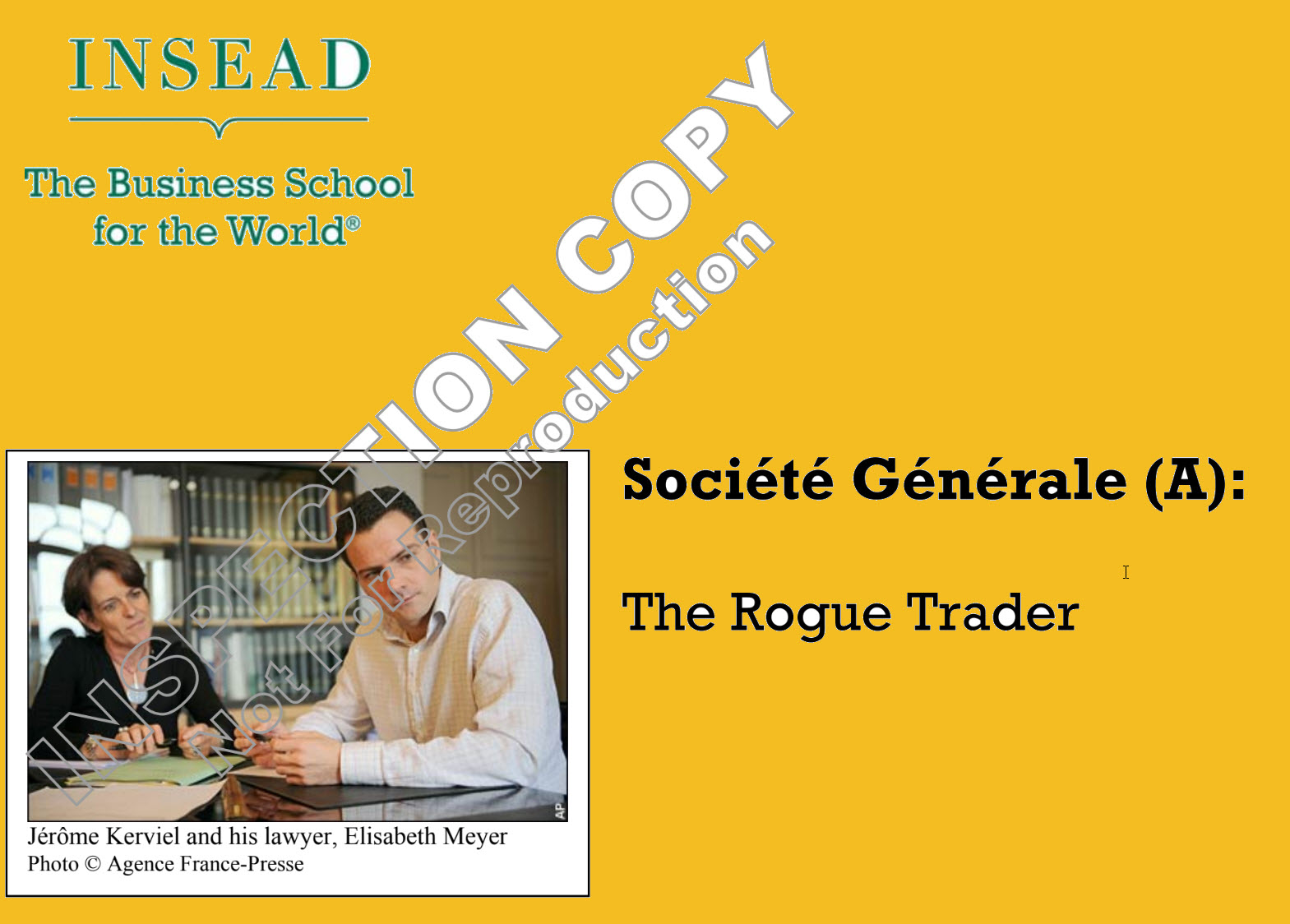
The end of 2007 had been dreadful for the French Stock Exchange in general, and in particular for the Société Générale (SocGen). Rumours of the exposure of the Eurozone’s fifth-largest bank to the subprime credit crisis1in the United States had driven down SocGen’s market capitalisation by 23% since the summer. CEO Daniel Bouton had repeatedly assured investors that “the situation is under control… our economic model is sound and our strategy is working,”2but investors remained anxious. On “Black Tuesday”, 15 January 2008, fears that major US financial institutions were more exposed to defaulting mortgages than they had previously admitted set off a global slump in stock markets. That same Black Tuesday, a review of trading operations by the Direction Financière (Accounting and Financial Affairs department, ACFI) was underway in SocGen’s Corporate and Investment Banking division (SGCIB).3(See Exhibit 1 for an organization chart). A main purpose of the review was to ensure that the trades conducted by SGCIB’s Global Equity and Derivatives Solutions (GEDS) unit met regulatory requirements under the Basel Accords, concerning the amount of capital a bank must have on hand relative to its risk-adjusted assets in case of unexpected losses.4(See Exhibit 2 for an organisation chart of GEDS.).At SocGen, equity derivatives – financial instruments whose value is based wholly or partially on equities – were a major profit engine. Analysts believed that equity derivatives might account for up to 80% of all SocGen’s investment banking revenues, worth several billion euros annually.5That took a lot of trading, and from time to time the “Cooke ratio” of 1“Subprime” mortgage loans were initially made to individuals whose ability to pay might be doubtful.




 扫码加好友,拉您进群
 全部版块
全部版块 我的主页
我的主页


 收藏
收藏