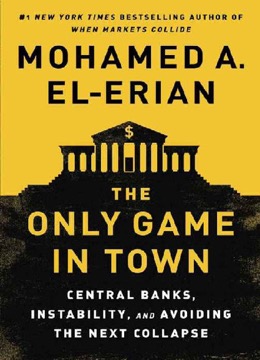
The Only Game in Town: Central Banks, Instability and Avoiding the Next Collapse. By Mohamed El-Erian. Random House; 296 pages; $28.
THE past seven years have been an extraordinary period for central bankers. Not only have they cut interest rates to zero (and even below) in the developed world; for the first time in their history central banks have greatly expanded their balance sheets, buying government bonds and other assets. Most economists agree that vigorous action was needed in the wake of the financial crisis in 2007-08 in order to head off a repeat of the Great Depression. Nevertheless, the sheer scale and protracted nature of such monetary stimulus is now a cause for concern among some commentators; have the banks permanently distorted the economy? In December the Federal Reserve made the first, tentative step towards normality, with a quarter-point rate increase.
过去七年对央行行长们是一段非凡的时期。他们不仅把发达国家的利率降到了零(甚至零以下),而且前所未有地极大扩展了其资产负债表来购买政府债券和其他资产。大部分经济学家都认同,2007年至2008年的金融危机过后,需要强有力的行动来避免大萧条重演。然而,这种货币刺激方案的庞大规模与长期持续如今引发了一些评论人士的担忧。央行是否已经永久地扭曲了经济?12月,美联储将利率上调0.25个百分点,迈出了货币政策回归常态化尝试性的第一步。
Mohamed El-Erian, a former IMF economist and executive at the Pimco fund management group, is the latest to sound the alarm. While central banks “averted tremendous human suffering”, he argues that they have failed to generate what the Western world really needs—“the combination of high, durable and inclusive growth together with genuine financial stability”.
曾任国际货币基金组织经济师、太平洋投资管理公司(Pimco)前主管的穆罕默德·埃尔-埃利安(Mohamed El-Erian)是最近又一位敲响警钟的人。他认为,虽然央行“避免了巨大的人类苦难”,但它们未能创造出西方世界真正需要的东西:“持久的、包容性的高增长与真正的金融稳定性并举”。
Worse still, politicians have come to rely on central bankers to provide the main source of economic stimulus. As a result, Mr El-Erian asserts, they have failed to force through reforms that were badly needed. The long period of easy monetary policy has pushed up asset prices and thus wealth inequality. It has also meant that the appetite for financial risks (market speculation, in other words) is greater than the willingness of businesses to take economic risks by increasing investment.
更糟的是,政客们已经变得依赖央行作为提供经济刺激的主要来源。其结果是,埃尔-埃利安断言,他们未能强力推行亟需的改革。长期宽松的货币政策推高了资产价格,从而扩大了贫富差距。它也意味着,人们对金融风险(换言之,投机)的胃口要大于企业冒险增加投资的意愿。
Other problems include high long-term unemployment, a loss of trust in authority and the failure to co-ordinate economic policy. The global economy is rapidly approaching a T-junction, he argues, where the road heads in two diametrically opposite directions. One will lead to higher growth, reduced financial risk and a lessening of inequality; the other will see all those measures head in the wrong direction.
其他问题包括长期失业率高企、对政府的信任丧失,以及未能协调实施经济政策。他指出,全球经济正快速接近一个三岔路口,道路自此将向两个截然相反的方向前进。其中一条导向更高的增长率、更低的金融风险,以及不平等的减少,而在另一条路上,所有相关措施都会通向歧途。
Mr El-Erian does a good job of describing the problems. But the book falters when he tries to set out his plan for taking the right path away from the T-junction. He cites a number of necessary measures, including revamping the education system, strengthening infrastructure, improving labour competitiveness and flexibility, while simultaneously closing tax loopholes and increasing marginal tax rates on the wealthy in order to reduce inequality. But he only touches on these issues; a lot more detail is needed. Improving education may be a good idea, but it will be a decade or so before today’s schoolchildren have any impact on labour productivity. How will growth be improved in the meantime?
埃尔-埃利安在描述这些问题时表现出色,但当他尝试阐述他认为该如何在三岔路口走上正确道路时,开始变得支吾其词。他罗列了一些必要的措施,包括改造教育系统、加强基础设施、提升劳工竞争力和灵活度,与此同时填堵税收漏洞、提高对富人的边际税率以减少不平等。但他只是提到了这些议题,而细节远远不足。改善教育可能是一个好主意,但要让今天的学童能对劳工生产力产生任何影响,大概还要等上十年。那么在这段时间里,要如何改善经济增长?
Instead of answering such questions, he launches into a meandering section about the need for new thinking to deal with “bimodal distributions” (his T-junction metaphor). Just when readers want to get into the meat of the debate on economic policy, they are served a chapter called “Translating Awareness into Optionality, Resilience and Agility”. Mr El-Erian is right that employers need to embrace diversity in hiring, but that subject does not belong in a book on central banking.
作者没有回答这类问题,反而另辟一章,开始漫谈我们需要新的思维来应对“双峰分布”(他对三岔路口的比喻)。正当读者想要进入有关经济政策辩论的核心部分时,他们却读到了名为“把认知转化为可选性、适应力和敏捷度”的新章节。埃尔-埃利安说得没错,雇主在招人时确实需要拥抱多样性,但这个话题和一本有关央行的书无甚关系。
In a sense, however, the disappointing ending symbolises the state of economic debate. Central banks have provided all the help they can, and the burden of improving long-term growth ought to fall on politicians. But no one can agree on precisely what needs to be done.
不过,在某种程度上,这一令人失望的结尾恰恰象征了经济辩论的现状。央行已经提供了它们能够提供的所有帮助,改善长期增长的负担应该落到政客们的身上了。但是,对于确切需要做些什么,尚无人能够达成共识。





 扫码加好友,拉您进群
 全部版块
全部版块 我的主页
我的主页


 收藏
收藏