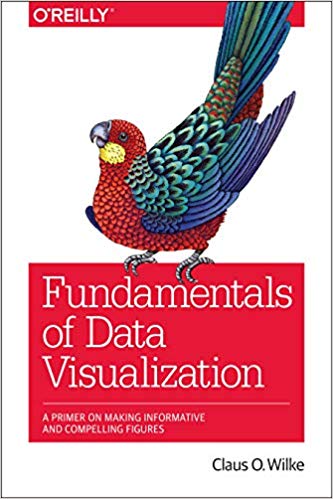
Fundamentals of Data Visualization
Claus O. Wilke
 本书每一张图片堪称精心制作,达到出版级水准
亚马逊对本书的摘要
Effective visualization is the best way to communicate information from the increasingly large and complex datasets in natural and social sciences. But with the increasing power of visualization software today, scientists, engineers, and business analysts often have to navigate a bewildering array of visualization choices and options. This practical book takes you through many commonly encountered visualization problems and pitfalls and provides simple and clear guidelines on how to turn large datasets into clear and compelling figures. What visualization type is best for the story you want to tell? How do you make informative figures that are visually pleasing? Author Claus O. Wilke teaches you the elements most critical to successful data visualization. Explore the basic concepts of color use as a tool to highlight, distinguish, or represent a value Understand the importance of redundant coding to ensure that you provide key information in multiple ways Use our directory of visualizations: a graphical guide to the most commonly used types of data visualizations Get extensive examples of good and bad figures; learn how to use figures in a document or report Learn methods for visualizing amounts and proportions, paired data, trends, and time series Visualize distributions with histograms and density plots, boxplots and violin plots, and ridgeline plots
本书每一张图片堪称精心制作,达到出版级水准
亚马逊对本书的摘要
Effective visualization is the best way to communicate information from the increasingly large and complex datasets in natural and social sciences. But with the increasing power of visualization software today, scientists, engineers, and business analysts often have to navigate a bewildering array of visualization choices and options. This practical book takes you through many commonly encountered visualization problems and pitfalls and provides simple and clear guidelines on how to turn large datasets into clear and compelling figures. What visualization type is best for the story you want to tell? How do you make informative figures that are visually pleasing? Author Claus O. Wilke teaches you the elements most critical to successful data visualization. Explore the basic concepts of color use as a tool to highlight, distinguish, or represent a value Understand the importance of redundant coding to ensure that you provide key information in multiple ways Use our directory of visualizations: a graphical guide to the most commonly used types of data visualizations Get extensive examples of good and bad figures; learn how to use figures in a document or report Learn methods for visualizing amounts and proportions, paired data, trends, and time series Visualize distributions with histograms and density plots, boxplots and violin plots, and ridgeline plots
作者对书的介绍
The book is meant as a guide to making visualizations that accurately reflect the data, tell a story, and look professional. It has grown out of my experience of working with students and postdocs in my laboratory on thousands of data visualizations. Over the years, I have noticed that the same issues arise over and over. I have attempted to collect my accumulated knowledge from these interactions in the form of this book.
前言部分
If you are a scientist, an analyst, a consultant, or anybody else who has to prepare technical documents or reports, one of the most important skills you need to have is the ability to make compelling data visualizations, generally in the form of figures. Figures will typically carry the weight of your arguments. They need to be clear, attractive, and convincing. The difference between good and bad figures can be the difference between a highly influential or an obscure paper, a grant or contract won or lost, a job interview gone well or poorly. And yet, there are surprisingly few resources to teach you how to make compelling data visualizations. Few colleges offer courses on this topic, and there are not that many books on this topic either. (Some exist, of course.) Tutorials for plotting software typically focus on how to achieve specific visual effects rather than explaining why certain choices are preferred and others not. In your day-to-day work, you are simply expected to know how to make good figures, and if you’re lucky you have a patient adviser who teaches you a few tricks as you’re writing your first scientific papers.
作者开放了书籍的网页版 https://serialmentor.com/dataviz/ 和书籍 R Markdown 源文件
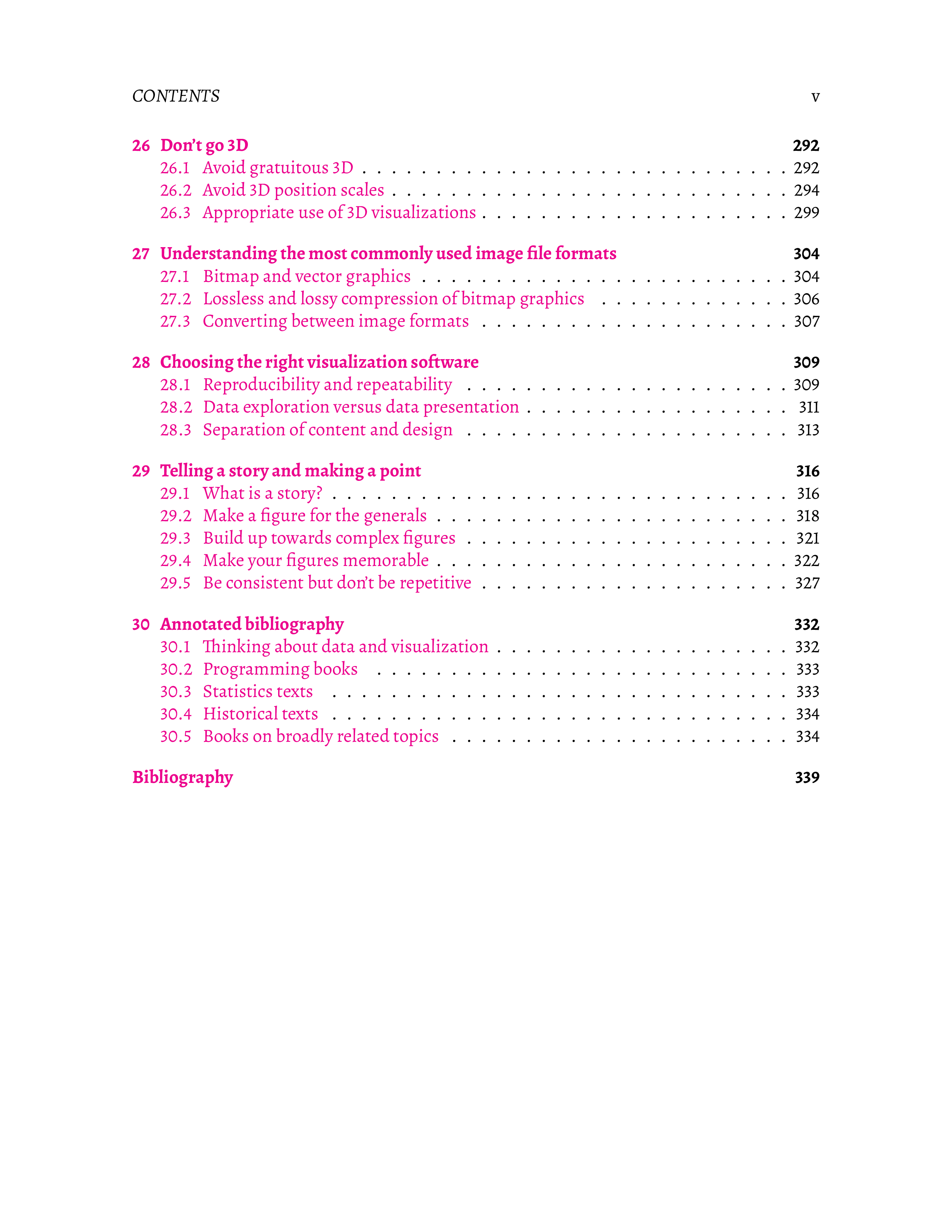
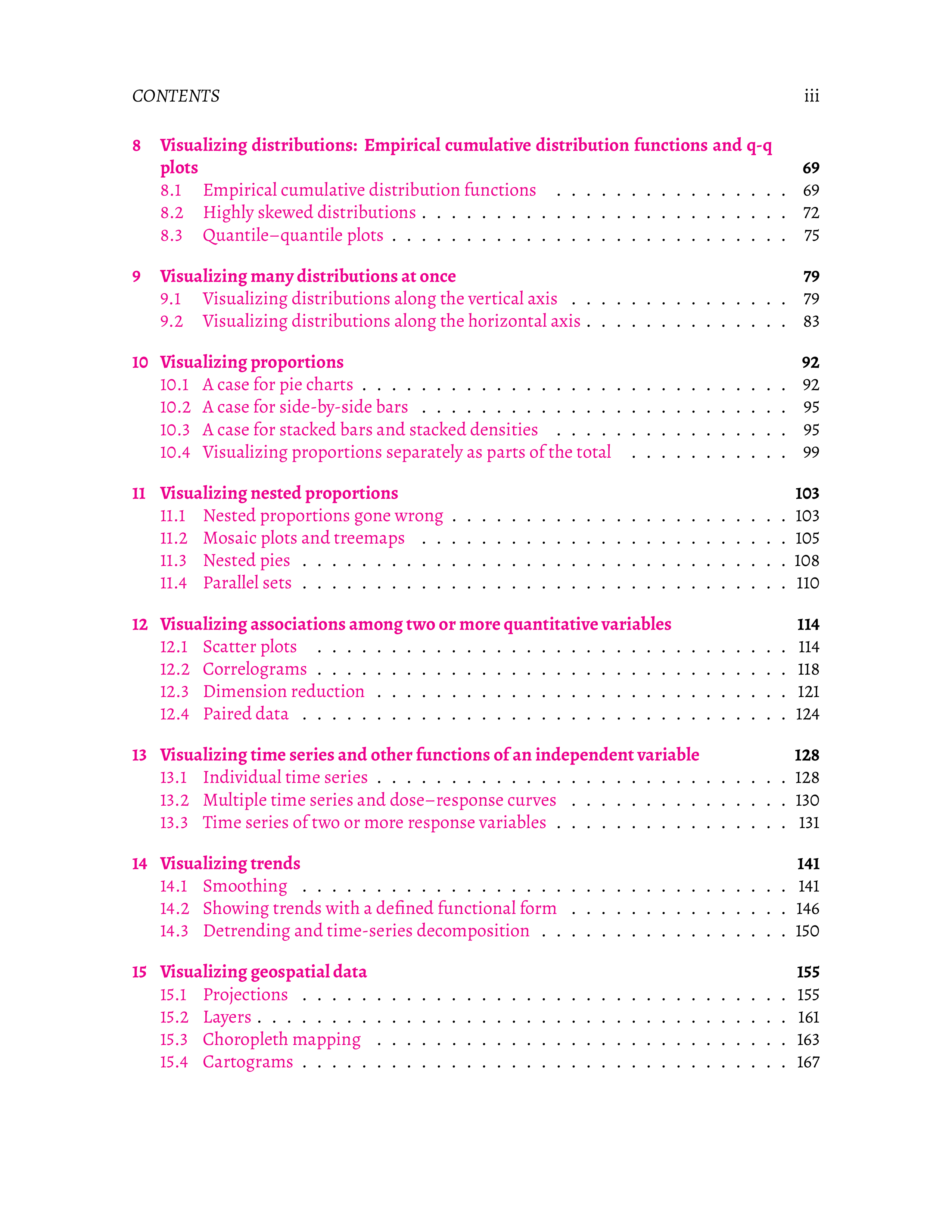
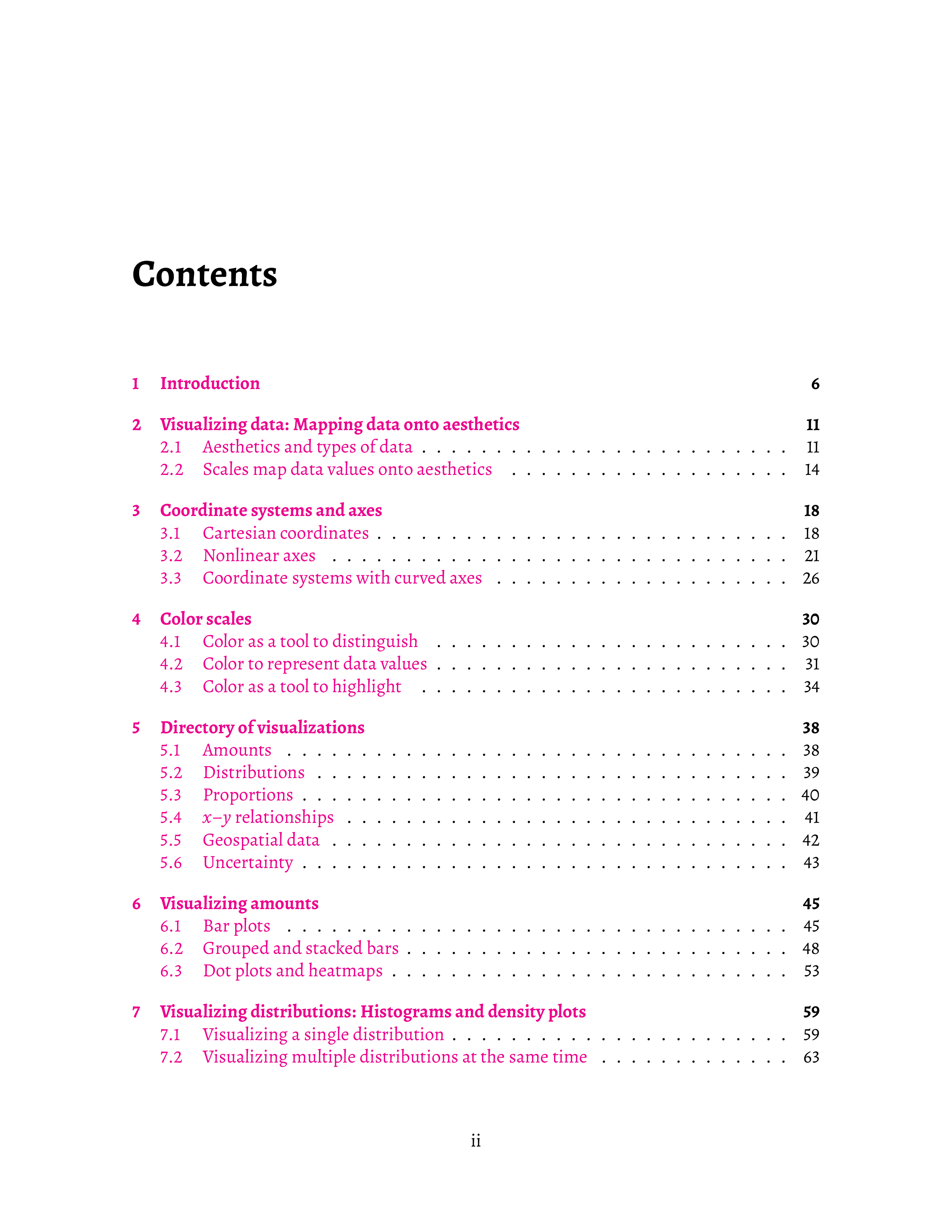
https://github.com/clauswilke/dataviz. 由于编译 PDF 电子版难度极大,这里给需要的人提供便利,仅供学习交流使用,书籍目录预览如下
纸质版目前在亚马逊上预售 https://www.amazon.cn/dp/1492031089 鼓励有条件的购买纸质版原书






 扫码加好友,拉您进群
 全部版块
全部版块 我的主页
我的主页


 收藏
收藏