Marketing guru Scott Galloway ran some numbers on Amazon's taxpaying earlier this month and had this to say:
The most disturbing stat in business?
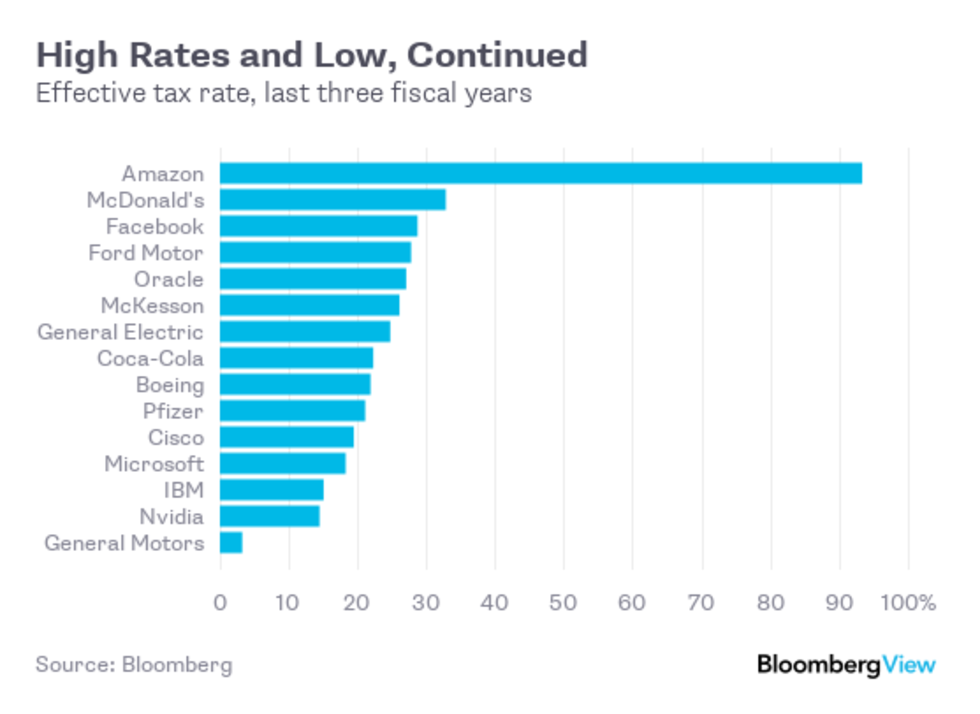
Since 2008 Walmart has paid $64B in corporate income tax, while Amazon has paid $1.4B. This is despite the fact that, in the last 24 months, Amazon has added the value of Walmart to its market cap.

Amazon's corporate income tax bill is so small, though, because its corporate income (aka profit) is so small. Wal-Mart's pretax income since 2008 has totaled $209 billion, Amazon's less than $11 billion. So while Amazon's rise to fifth-biggest market cap in the world on the strength of such small earnings is a fascinating and perhaps disturbing phenomenon, it doesn't necessarily signal a problem with our system of corporate taxation.
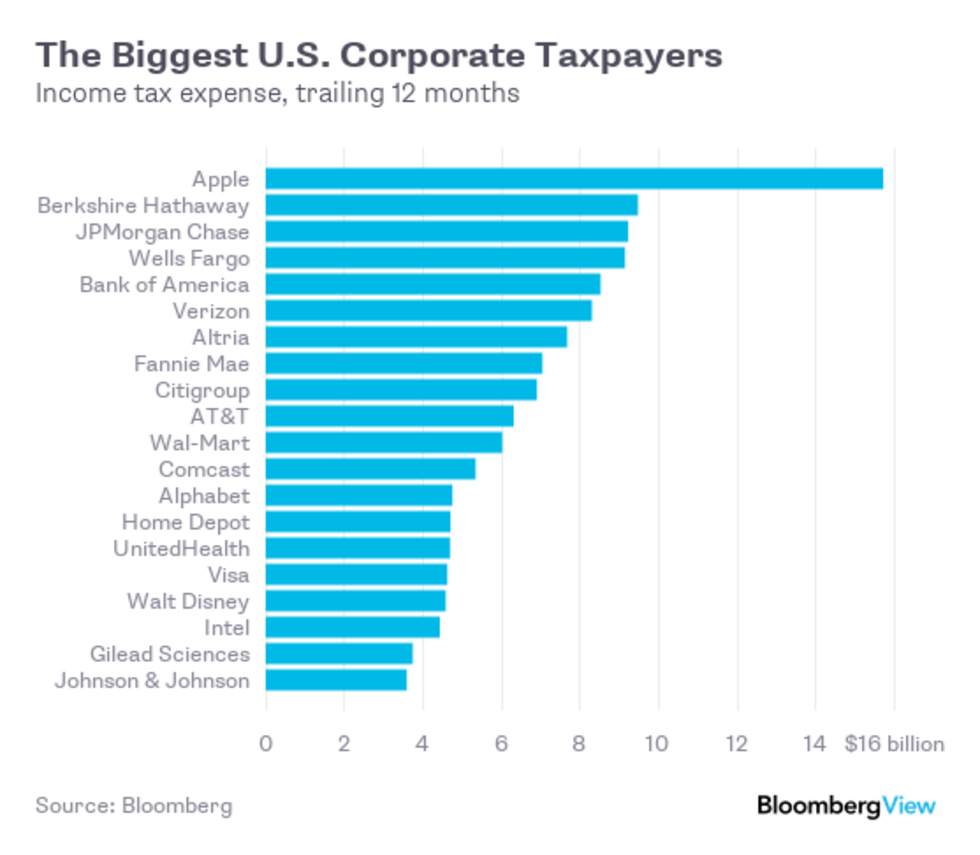
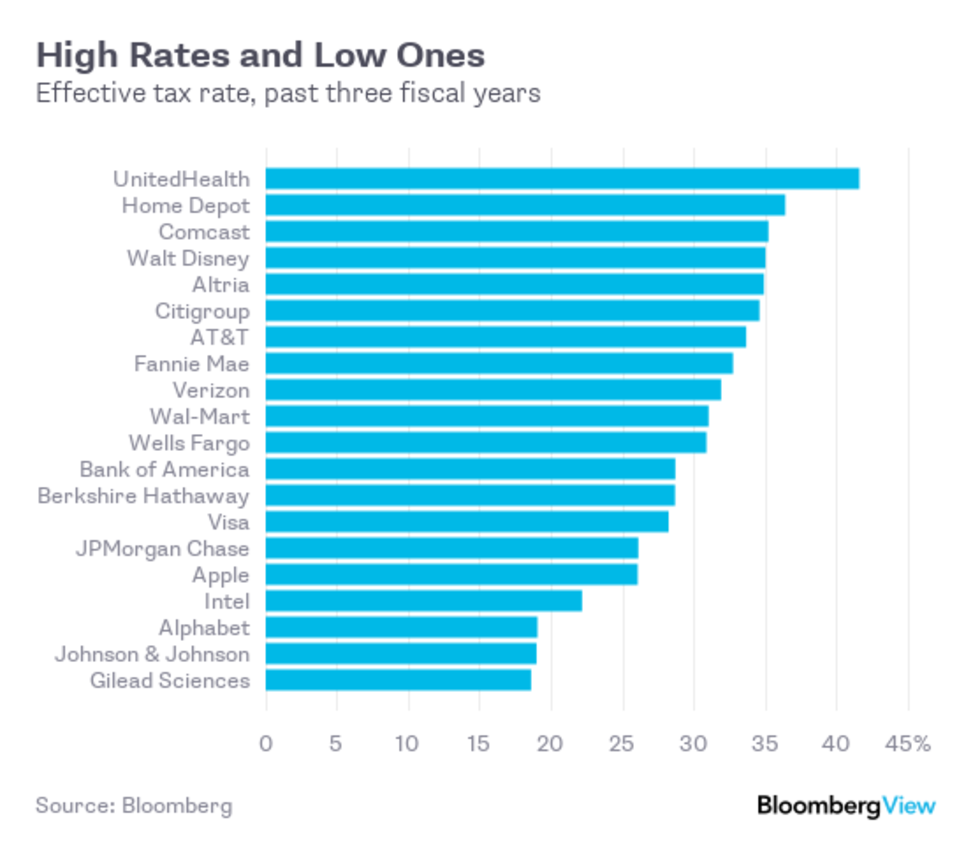
Other disparities in tax burdens might signal problems, though. So here are those top-20 taxpayers, ranked by their effective tax rates, which I calculated over three years because one-year rates can sometimes be pretty anomalous:


The prominent U.S. corporations facing low effective tax rates share some key characteristics. General Motors' super-teeny-weeny tax rate is a unique product of the government bailout that rescued it in 2009 -- its total reported income tax expense since then is negative $33.6 billion. Most of the other low-rate corporations are either in technology or pharmaceuticals. These companies tend to have lots of overseas earnings, which lowers the effective rate because, as noted, the U.S. statutory corporate rate is among the highest in the world. Their businesses also tend to be built around intangible assets, which can be moved around the world to the lowest-tax jurisdictions at the stroke of a pen.
The corporations that face high tax rates, on the other hand, tend to have U.S.-focused businesses and more reliance on the tangible. They have far less ability to shift operations to where the taxes are lower.




 扫码加好友,拉您进群
 全部版块
全部版块 我的主页
我的主页

 收藏
收藏