来源:微信订阅号“经济学江湖事” 原创: 厦门大学微观老师
关于吉芬品和一般需求定律之间的不同,厦门大学经济学院经济学实验班的微观经济学老师给出了详细的解答。尽管有些学者说北京的房子是吉芬品,但我希望你从这个习题的解答中能明白,所谓学者的话可信可不信,没有什么比你建立在坚实理论基础之上的理性思考更重要!
In the article “The Indiana Jones of Economics,” Robert Jensen talks about the difficulty of identifying Giffen behavior from data:
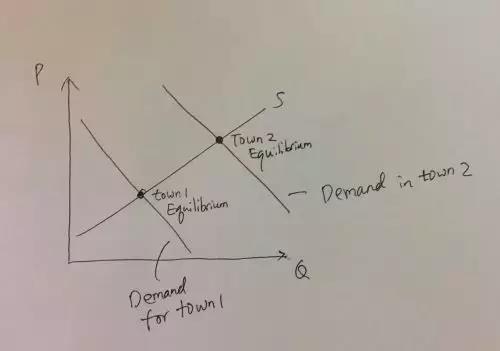
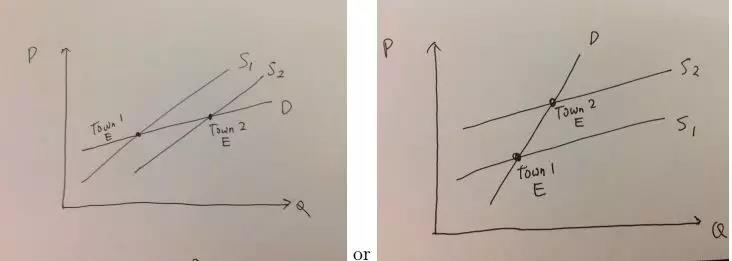
“Remember, we’re looking for a positive correlation between price and consumption/demand— higher prices associated with higher quantity demanded, lower prices with lower quantity demanded. So, let’s say we see a bunch of towns, and people living in those towns with the highest rice prices consume the most rice. Case closed, right? Not quite. Plain old economics tells us that if people want more of some good, its price goes up. So, we see high rice prices where there is high rice consumption, but did the high consumption cause the high price (economics as usual) or did the high price cause the high consumption (Giffen behavior)?”
Using supply and demand diagrams, explain what Jensen means.
Scenario 1: Economics as Usual

Scenario 2: Giffen Behavioror

If we only observe data on rice price and consumption in different towns, then we cannot differentiate between scenario 1 and 2. Both can explain the positive correlation between price and consumption (if exists). To make sure it is scenario 2, we need to make sure that the demand curve does not move. That‘s why Jensen uses experimental methods to discover Giffen behavior: by giving people subsidies, he is able to change the prices that people face without changing their demand.




 扫码加好友,拉您进群
 全部版块
全部版块 我的主页
我的主页


 收藏
收藏