
主题为【学道会】活动,点击了解详情
我会不定期在主题帖里记录我的学习内容(主要为网易公开课和TED,有兴趣的坛友可以跟帖和我一起学习)
有效回帖会有论坛币奖励哦! (注意:与主题内容相关的跟帖笔记才是有效跟帖)
 Why you should love statistics?
视频链接
Why you should love statistics?
视频链接
Think you're good at guessing stats? Guess again. Whether we consider ourselves math people or not, our ability to understand and work with numbers is terribly limited, says data visualization expert Alan Smith. In this delightful talk, Smith explores the mismatch between what we know and what we think we know.
So extraordinary variations, and surprising to some,
but not surprising to people who have read the work of Daniel Kahneman, for example, the Nobel-winning economist.
He and his colleague, Amos Tversky, spent years researching this disjoint between what people perceive and the reality,
the fact that people are actually pretty poor intuitive statisticians.
And there are many reasons for this.
Individual experiences, certainly, can influence our perceptions,
but so, too, can things like the media reporting things by exception, rather than what's normal.
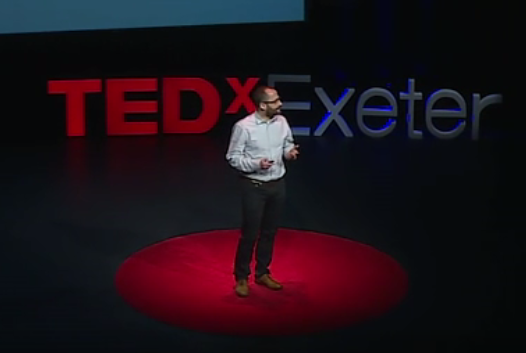
Kahneman had a nice way of referring to that.
He said, "We can be blind to the obvious" -- so we've got the numbers wrong -- "but we can be blind to our blindness about it."
And that has enormous repercussions for decision making.
So at the statistics office while this was all going on, I thought this was really interesting.
I said, this is clearly a global problem, but maybe geography is the issue here.
These were questions that were all about, how well do you know your country?
So in this case, it's how well do you know 64 million people?
Not very well, it turns out. I can't do that.
So I had an idea, which was to think about this same sort of approach but to think about it in a very local sense.
Is this a local? If we reframe the questions and say, how well do you know your local area, would your answers be any more accurate?
如此巨大的差异震惊了一些人,
但是对一些人来说并不惊讶,比如阅读过诺贝尔经济学奖获得者丹尼尔·卡内曼的研究成果的人。
他和他的同事,阿莫斯·特沃斯基,花费了数年的心血在这个人们的见解与现实脱节的问题上,
实际上人们是直觉很差的统计学家。
这背后有着很多原因。
个人体验,当然可以影响我们的见解,
但也包括媒体带有偏见而非全面客观的报道。
卡内曼对此有一个很好的描述。
他说,“我们对显而易见的事情视而不见”--所以我们有了错误的数字--“但是我们可以对我们视而不见这个事实视而不见。”
而这对做决策来说有巨大的影响。
那么在统计学办公室,当这些事情在发生的时候,我觉得很有趣。
我认为显然这是一个全球性的问题,但也许与地域差异有关。
这里的一些问题都是关于你对你的国家了解多少。
在这个问题里,是在问关于你对6400万人口了解多少?
结果是,我并不是很了解。
所以我有了一个想法,是用相同的方法,但是以一种非常地方化的方式来思考。
这是因地制宜的吗?如果我们重新思考问题然后说,你对你的当地状况了解多少,你的答案会更准确吗?





 扫码加好友,拉您进群
 全部版块
全部版块 我的主页
我的主页


 收藏
收藏





