With central banks setting rates below zero and investors buyingbonds at high prices, there’s a huge pile of debt paying a negativeyield. What changes when it costs to lend and pays to borrow? One of the basic assumptions of debt is thatborrowers pay interest to lenders. That idea hasbeen upended in the global bond market. There’snow about $13 trillion in negative-yielding bonds ①.Investors who hold them to maturity will end upgetting less money than they paid for them, evenincluding interest. The prevalence of negativeyields pulls down the rates on all kinds of debt—including riskier loans—creating a bonanza for borrowersand some pain for lenders and savers. Yetthese less-than-zero rates are largely a symptom ofdeeper problems in the economy.
Negative-yielding bonds make up about a quarterof the investment-grade debt tracked by theBloomberg Barclays Global-Aggregate Index ②.Investors have to pay to own more than 80% ofGermany’s federal and regional government bonds;almost the entire Danish government market isnegative. The U.S. is one of a dwindling number ofnations with no negative-yielding sovereign debt.

How can a bond have a negative yield ③? Itstarts when an investor buys a bond for more thanits face value. If the total amount of interest thebond pays over its remaining lifetime is less thanthe premium the investor paid for the bond, theinvestor loses money and the bond is consideredto have a negative yield.
Investors are willing to pay a premium—and ultimatelytake a loss—because they need the reliabilityand liquidity that government and high-quality corporate bonds provide. Large investors such aspension funds, insurers, and financial institutionsmay have few other safe places to store their wealth.
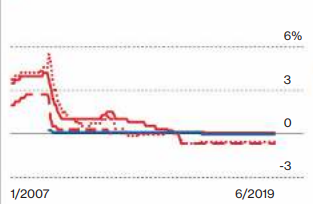
Monetary authorities have brought down bondyields by keeping key interest rates exceptionallylow since the financial crisis ④, with the aim of spurringborrowing that would lead to economic growth.After the ECB cut its deposit rate below zero in 2014—central banks are able to actually charge banks tohold their money—several of Europe’s other monetaryauthorities also introduced negative rates. TheBank of Japan soon followed, although it was alreadya trailblazer when it adopted zero interest rates twodecades ago. Central banks also helped push ratesdown by embarking on purchases of longer-termdebt, in what became known as quantitative easing.

Central bankers are reacting to broader economicforces. One reason they typically raise ratesis to curb inflation. But prices haven’t been shootingupward, and gauges of the market’s inflationexpectations ⑤ show there’s little on the horizon.Particularly in Japan, persistent fears of deflation—falling prices—can make negative yields seem likea reasonable deal. Inflation generally goes hand inhand with a strong economy. While central bankershave been trying to stimulate growth, some governmentshave been more conservative. Take Germany:Even though the bond market is willing to pay thecountry to borrow, the government has been reluctantto jeopardize its budget surplus.
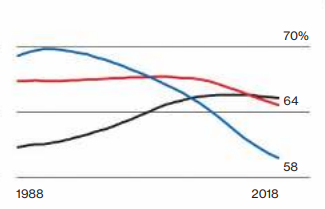
One theory is that demographic forces ⑥ willkeep inflation and rates permanently low. Europeis thought to be going through a process that’salready played out in Japan—as populations get olderand the share of working-age people falls, theremay be too little consumer demand pushing pricesup. Meanwhile, pension funds are willing to payup for long-dated bonds—and accept low yields—to match their increased retirement liabilities.
Ultralow rates on the safest bonds have hada spillover effect on other markets. A handfulof corporate junk bonds denominated in euroshave negative yields. Investors are bidding upthe prices of all kinds of riskier assets—from equitiesto emerging-market bonds—in search of betterreturns. “It’s a huge question and dilemma forsavers,” says Andrew Bosomworth, head of portfoliomanagement in Germany for Pimco.

On the flip side, most banks in Europe haven’tbeen able to pass negative rates onto their depositors,squeezing interest margins ⑦. Advocates ofnegative rates argue that they nonetheless havehelped boost overall bank earnings by underpinningeconomic growth. But major European lenderssay further rate declines will cut into theirprofitability. Deutsche Bank’s finance chief Jamesvon Moltke told Bloomberg Television on July 24that lower rates pose “a significant risk to us.”
The U.S. has never had negative rates on conventionalTreasuries, but it’s come close. Twoyearyields touched 0.14% in 2011 and stayed verylow until the Federal Reserve started hiking ratesat the end of 2015. Now, amid worries about theeconomy, the Fed is expected to go back to cuttingrates this month. With 10-year Treasuries payingabout 2%, negative seems a long way off—theprice of the bond would have to rise about 20%.But the minus sign has become so commonplacein so much of the world, nothing seems impossible.Says Scott Thiel, chief fixed-income strategistat BlackRock Inc.: “There’s no chapter in yourbond math book on this.” —— John Ainger, with PhilKuntz and John Authers

① Market value of negative-yielding bonds*
② Negative-yieldingdebt by country, as ofJune 28
③ How to get anegative yield, usingGerman bonds as anexample
④ Key interest rates
⑤ Expected inflationrate for the euro area,measured by swaps forthe second half of thenext decade
⑥ Working-age (15-64) people as ashare of the total population




 扫码加好友,拉您进群
 全部版块
全部版块 我的主页
我的主页

 收藏
收藏