def process_response(response): # Scenario 1: Standard Dictionary Response if isinstance(response, dict): status = response.get("status")
if status == 200: # We have to be careful that 'data' actually exists data = response.get("data", {}) results = data.get("result", []) print(f"Success! Processed {len(results)} files.") return results
elif status == 500: error_msg = response.get("error", "Unknown Error") print(f"Failed with error: {error_msg}") return None
else: print("Unknown status code received.") return None
# Scenario 2: The Legacy List Response elif isinstance(response, list): print(f"Received legacy list with {len(response)} jobs.") return response
def process_response_modern(response):
    match response:
        # Case 1: Success (Matches specific keys AND values)
        case {"status": 200, "data": {"result": results}}:
            print(f"Success! Processed {len(results)} files.")
            return results

        # Case 2: Error (Captures the error message and retry time)
        case {"status": 500, "error": msg, "retry_after": time}:
            print(f"Failed: {msg}. Retrying in {time}s...")
            return None

        # Case 3: Legacy List (Matches any list of integers)
        case [first, *rest]:
            print(f"Received legacy list starting with ID: {first}")
            return response

        # Case 4: Catch-all (The 'else' equivalent)
        case _:
            print("Invalid response format.")
            return None
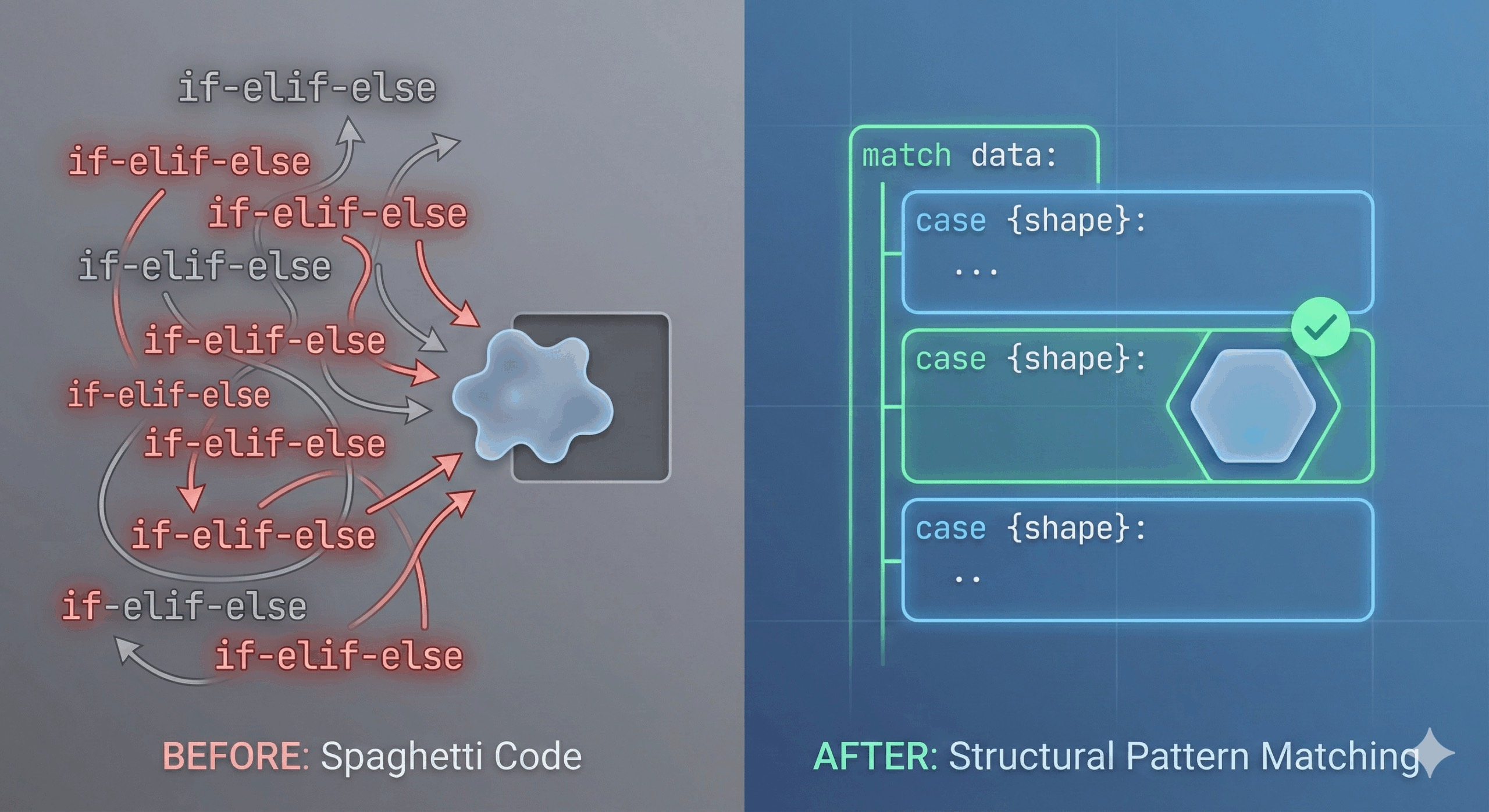
注意它比这条线短了几行,但这并不是唯一的优势。
为什么结构模式匹配如此棒
我至少能想到三个理由说明结构模式匹配能改善上述情况。matchcase
1. 隐式变量解包
注意案例1中发生的事情:
case {"status": 200, "data": {"result": results}}:




 扫码加好友,拉您进群
 全部版块
全部版块 我的主页
我的主页


 收藏
收藏