By (author):
Steven Rosefielde (
University of North Carolina, USA),
Daniel Quinn Mills (
Harvard Business School, USA)
[size=12.960000038147px]2015 | ISBN-10: 9814590509 | 225 pages | PDF | 1,5 MB
The global financial crisis of 2008 was resolved over the course of two years after the collapse of the US housing bubble, but the world economy did not vigorously rebound as expected. The West has been torpid, while Asian economic vitality has steadily waned. These developments have been diversely interpreted and authorities have responded with a series of institutional reforms and policy fixes, without coming to grips with accumulating national debts, the kinds of speculative practices that caused the financial crisis, and the inadequacies of neoclassical and Keynesian macroeconomic explanations.
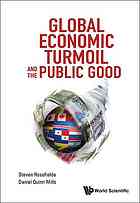
Global Economic Turmoil and the Public Good presents the cumulative research of both authors. It updates the readers on global economic developments since 2008, while providing a concise, yet comprehensive survey of the causes and protracted consequences of the 2008 financial crisis. The book explains the global financial disequilibrium and catastrophic crisis risks; surveys and appraises institutional reforms designed to reinvigorate growth and ameliorate financial crisis risk; and proposes specific actions which will prevent another global financial crisis and its economic fallout.
Contents:- Global Economic Turmoil:
- Playing with Fire
- Ignoring Today's Dangers
- Insider Democracy
- Squeezing the Middle Class
- Liberalization for the Privileged
- East–West Polarization
- Degeneration, Crisis and Disorder
- Obstacles to Crisis Prevention:
- Words Instead of Action
- Treadmill of Regulation
- Macroeconomic Miasma
- Dogmatism
- Pipe Dreams
- Doublethink
- Framework for Sustainable Prosperity:
- The Importance of Inclusive Economic Theory
- Breaking Vicious Cycles
- Lesser Evil
- Prospects
 http://www.worldscientific.com/worldscibooks/10.1142/9110




 扫码加好友,拉您进群
 全部版块
全部版块 我的主页
我的主页


 收藏
收藏