Fib-Fan Projection Interpretation
This technique is used for two purposes:
1. time the start and end of the next short-term swing up or down
2. provide future rising (or falling) support-resistance levels that let you determine trend strength
Regarding my use ofthe phrase "short-term trend", it's specific to the timeframe observed. So when a day-trader uses it on a 30-min chart they actually get a large swing in the timeframe they are trading, either the 5 or 1 minute timeframe. When used on a daily chart, they provide the overnight swing trader a larger move based on the 30-minute timeframe they may (or should) be monitoring. And when found on a weekly chart, the weekly short-term trend is an intermediate trend on the daily charts.
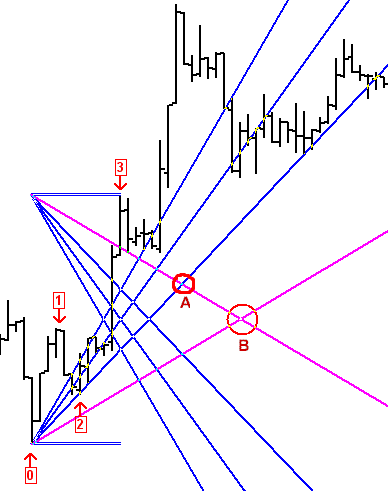
The first example is a 5-min chart of the DJ mini futures. For those using FT/GT, the 78% line is the magenta line - most software packages don't have this. In the below chart I have not moved the fib-fan's forward yet. Note the red circles - looking straight up you can see that they each timed a turning-point. They both require the 78% fan line. "A" is the 78% line intersecting the 62% fan line. "B" is the intersection of the two 78% fan lines.

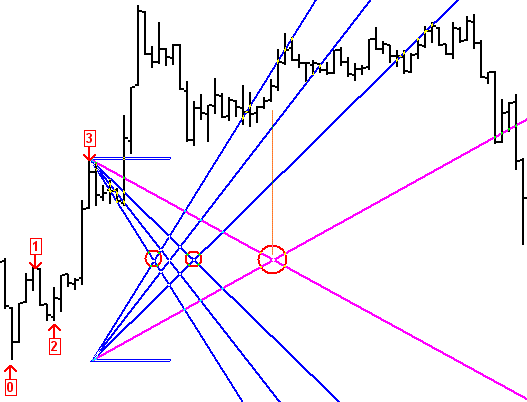
Below the two fans have been moved forward as described in the Drawing section. The blue lines are the "traditional" fan lines of 38%, 50% and 62%. You are interested in the first two red circles, which show the intersects of the 38% lines (the first circle) and the 62% lines (the second circle). These often time the start and end of a short-term swing. The third circle (the 78% intersects) isn't as relevant - usually you will have new pivots in place and will have redrawn this technique. I have found the projected 78% line to be a nice profit-objective when the three traditional fan-lines aren't supporting price.

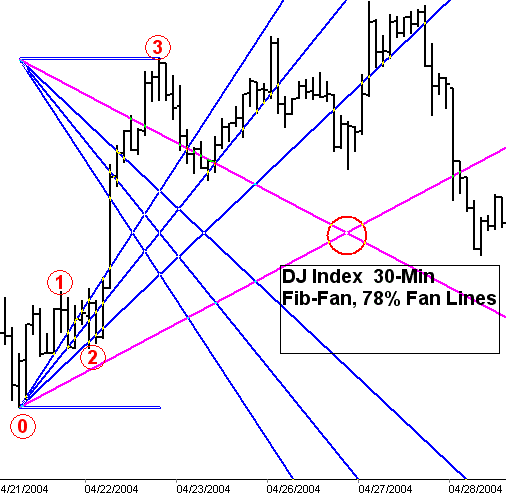
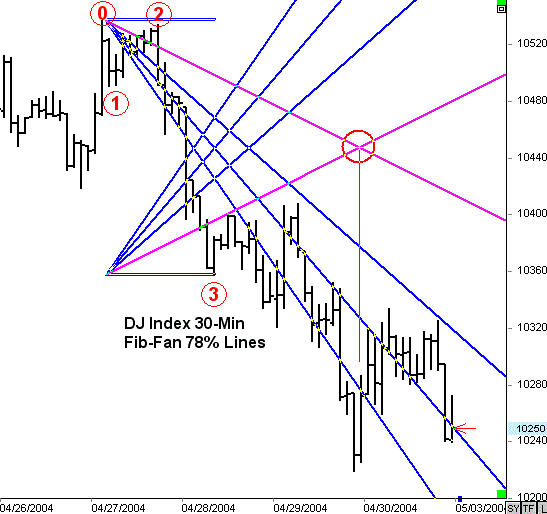
Below is a 30-min DJ index chart. Before we move the fans forward, we can see that the (magenta) 78% line intersects are again timing a short-term change. The intersect of the falling 78% line and rising 62% line is one bar off from the high bar above it.

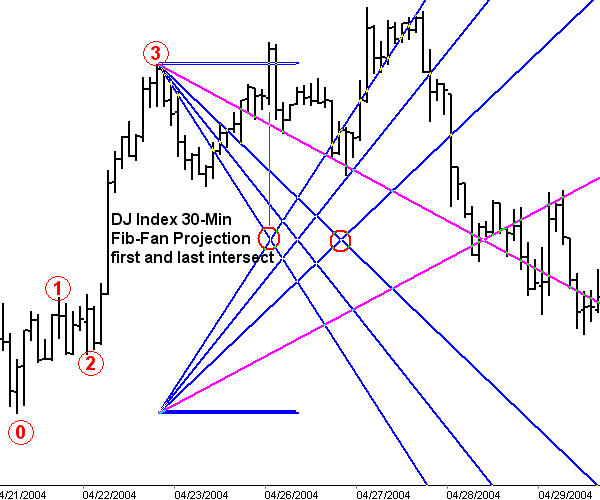
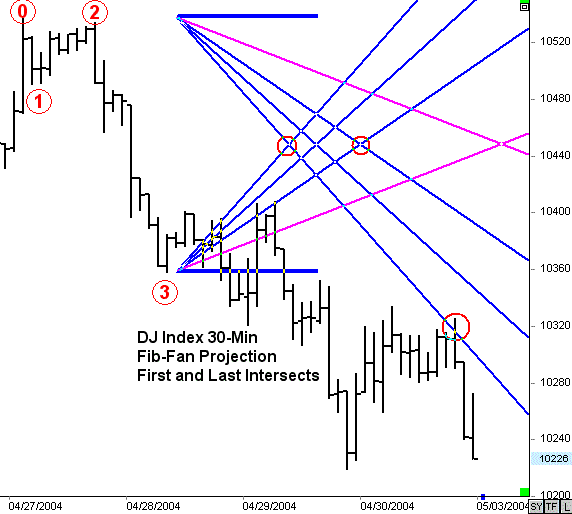
Below we have moved the fan-lines forward. Again, note that the two circled areas timed a swing perfectly. These show the intersects of the 38% lines (the first circle) and the 62% lines (the second circle), as in the 5-min chart example above. In all these examples please observe the behavior of price around the projected fan lines.

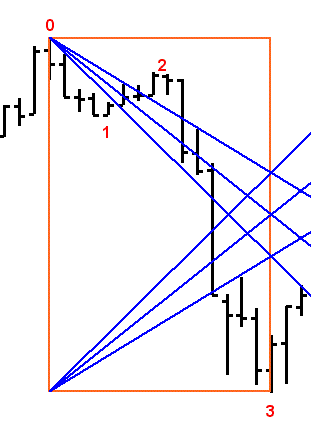
The below chart is also a 30-min DJ index chart, about a week after the above chart. Before we move the fan-lines forward note the intersect of the (magenta) 78% lines, which are timing a turning-point nicely. Also, the intersect of the 78% and 62% lines are timing a turning-point, as in all three examples.

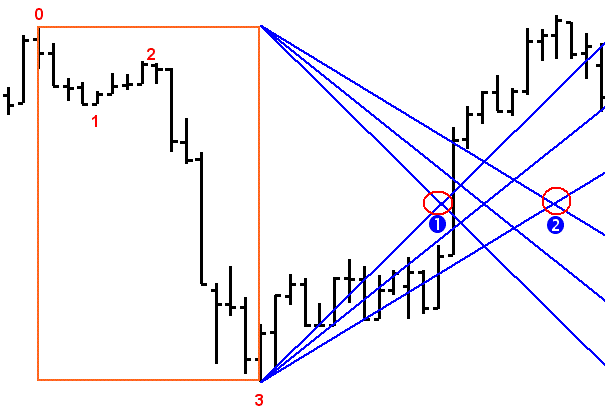
Now we are moving the fan-lines forward, which is the "proper technique", and we see that the two circled areas timed a swing. These show the intersects of the 38% lines(the first circle) and the 62% lines (the second circle) as in the above examples.

Next we're back to a 5-min chart of the DJ mini futures. I'm using MetaStock to draw the Fan Lines.

Below I'm moving the fan-lines forward. As in the above examples, note that the intersects of the 38% lines and the intersects of the 62% lines timed a swing.

Summary
This technique requires that a market show at least a few rising and falling swings in the timeframe you are monitoring. Please don't use it in sideways markets - use the Acceleration Projection instead. In markets that are already showing swings this Fib-Fan Projection technique is preferred over Acceleration Projection. In markets that are showing wide ranges, wider than normal, use both techniques(until you're comfortable with Pitchfork Angles, and advanced technique).
1. when used by itself, the primary purpose of this technique is to time the beginning and end of a short-term swing, using the intersects of the first and last "traditional" fan lines
2. when used to populate a Timing Matrix use the first and third intersect if the bar count is under 50; use all three if the bar count is over 50 (the bar count being the number of price-bars between the starting pivots)
3. if your software allows the use of a 78% fan line, prior to projecting the fans its intersects with itself and the 62% line are frequently turning points (but note that this 78% intersect is often within a bar of the projected 62% intersect)
4. the projected fan-lines appear to provide rising or falling short-term support and resistance




 扫码加好友,拉您进群
 全部版块
全部版块 我的主页
我的主页


 收藏
收藏